Start with the purpose, not the pose
Someone who feels uncomfortable on camera may be worrying about how they look, what to do with their hands or whether the photographs will represent them fairly. Before you lift the camera, explain what the images are for and where they might appear. A portrait for a team website may need a different mood from an image for an artist’s project. Ask which qualities they want the photograph to convey, such as approachability, focus or energy, and whether there are styles they would rather avoid.
Keep this conversation specific and brief. You might say, “We need a warm, straightforward portrait for your profile. We’ll try a few options, and you can tell me if one feels unlike you.” This gives the subject a goal and a way to participate without asking them to perform confidence. If you have examples, discuss what works about the light, setting or expression rather than asking them to copy another person.
Make the first few minutes easy
Prepare the space before the subject steps in. Check the background, light and camera settings with a stand-in or an empty frame where possible. A long technical pause while someone waits in position can make them more aware of the camera. If preparation is still needed, tell them what you are adjusting so the silence does not feel like a judgment of their appearance.
Begin with a simple position that requires little effort: standing near a window, sitting at a table or leaning lightly against a wall. Let them settle before refining anything. You can explain that the first frames are for finding the light and getting used to the process. Avoid reviewing every shot in front of them; constant inspection can make a subject feel evaluated. Instead, offer a calm update such as, “That position is working. I’m going to try a slightly different angle.”
Give one clear direction at a time
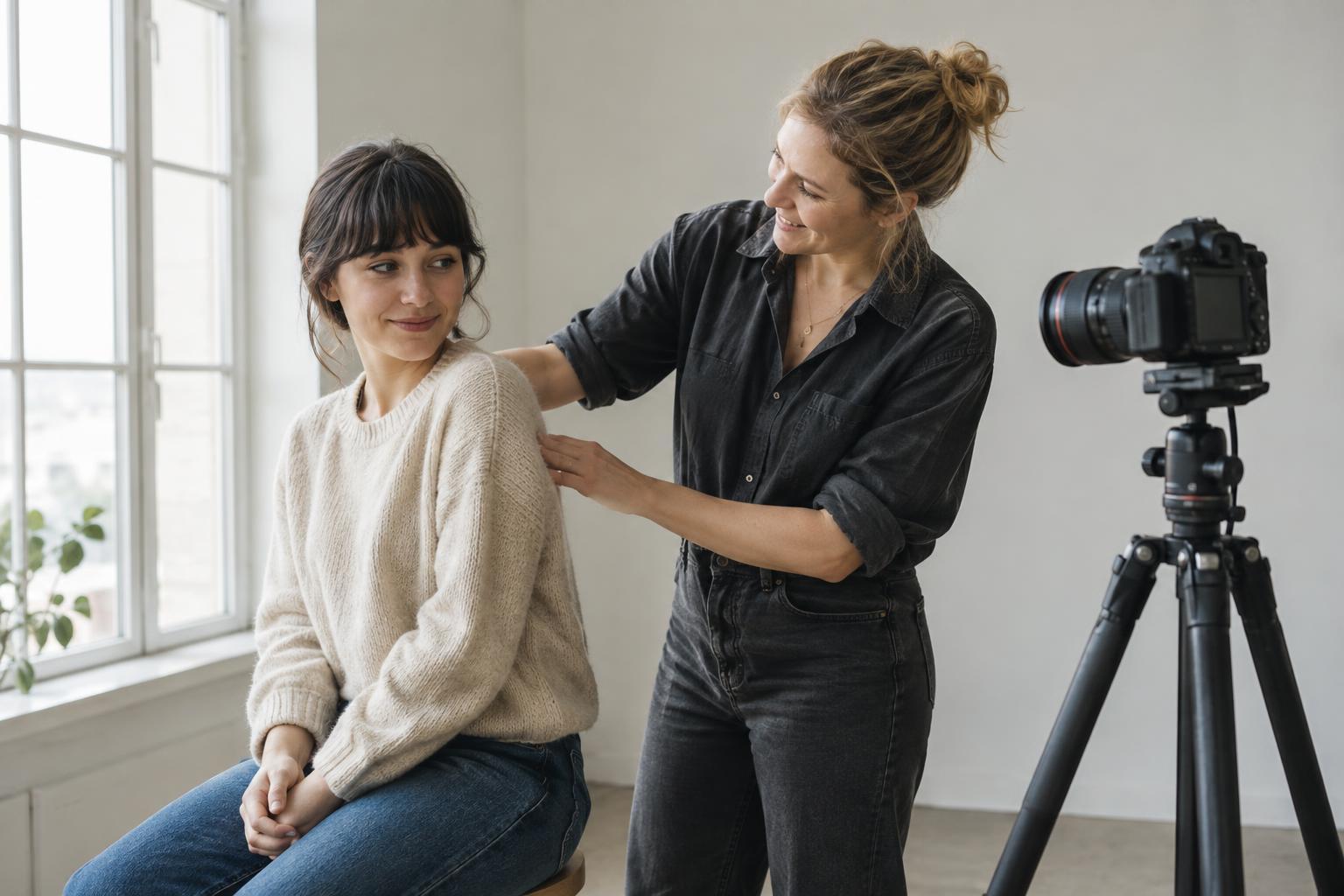
Broad requests like “Be natural” are difficult to act on, especially when a camera is pointed at you. Offer small, observable actions: “Turn your shoulders a little toward the window,” “Rest your hands on the table,” or “Look just past the camera.” After each change, allow a moment before shooting. If something is not working, change your instruction rather than telling the subject they are doing it wrong.
Movement can be easier than holding a fixed pose. Ask the subject to walk a few steps, turn back toward you or shift their weight between frames. For a maker in a workspace, invite them to handle a familiar tool or look over a piece of work, provided that action fits the purpose of the portrait. These prompts give the subject something concrete to do. Use them as options, not tricks: explain what you are trying and check that the activity feels comfortable.
Use feedback that helps, not praise that pressures
Useful feedback tells the subject what is working in the photograph. “That angle gives us a clear view of your face” or “The light is softer here” is more informative than repeated comments about how great they look. Be careful with instructions about facial expression. Asking for a bigger smile over and over may produce an expression that feels strained. Try a conversational pause, a change of position or a quieter expression instead.
Build in check-ins without making every frame a referendum. After a short series, ask, “Would you like to keep going in this spot or try the desk?” If the subject wants to see an image, show a promising frame and explain what you might still adjust. Listen when they say something does not feel like them. You do not have to promise that every concern can be solved in-camera, but you can take it seriously and offer another approach.
Finish with choice and a clear next step
If time allows, make a few variations rather than relying on a single setup. A change of distance, background or activity can give the subject options without turning the session into an endurance test. Notice signs that their energy is dropping and offer a break or a stopping point. More frames are not automatically more useful; a shorter session with attentive direction may give you a stronger selection.
Before you finish, explain how the photographs will be reviewed and who will choose the final images. If the project allows the subject input, describe when and how they can give it. Then make your initial selection against the agreed purpose: Is the expression believable? Does the setting support the story? Will the image work in its intended layout? A successful portrait should serve the project while remaining recognizable to the person in it.