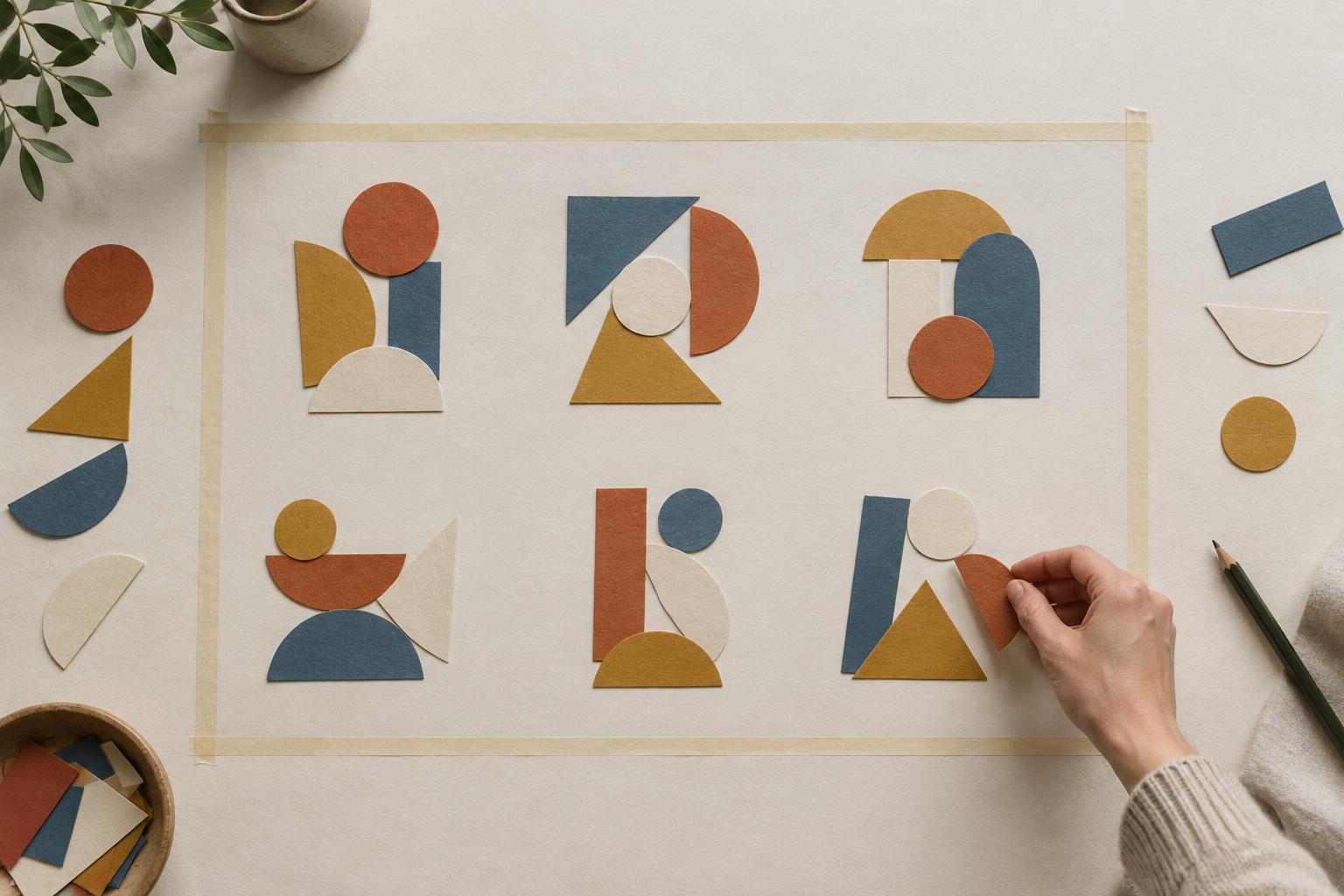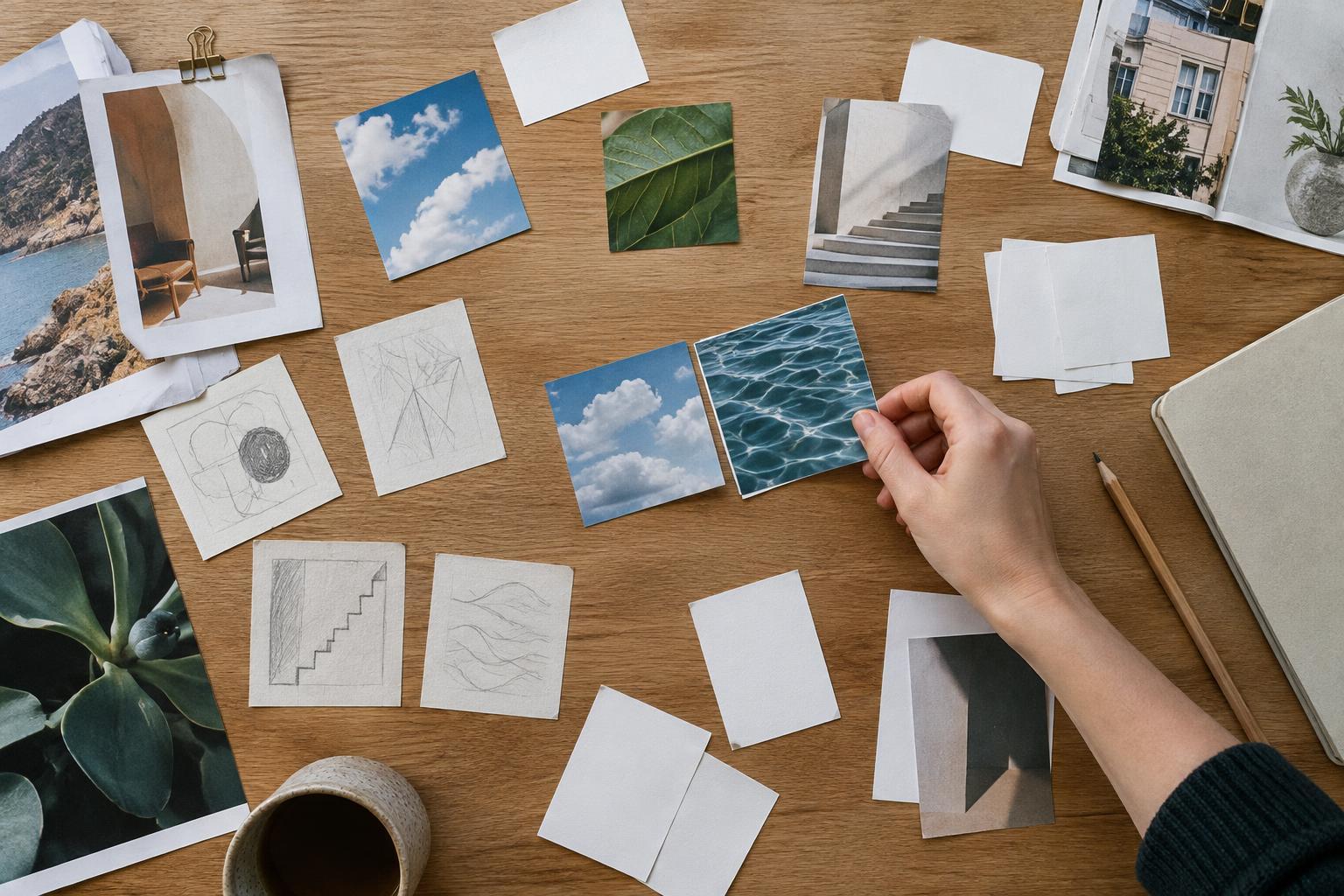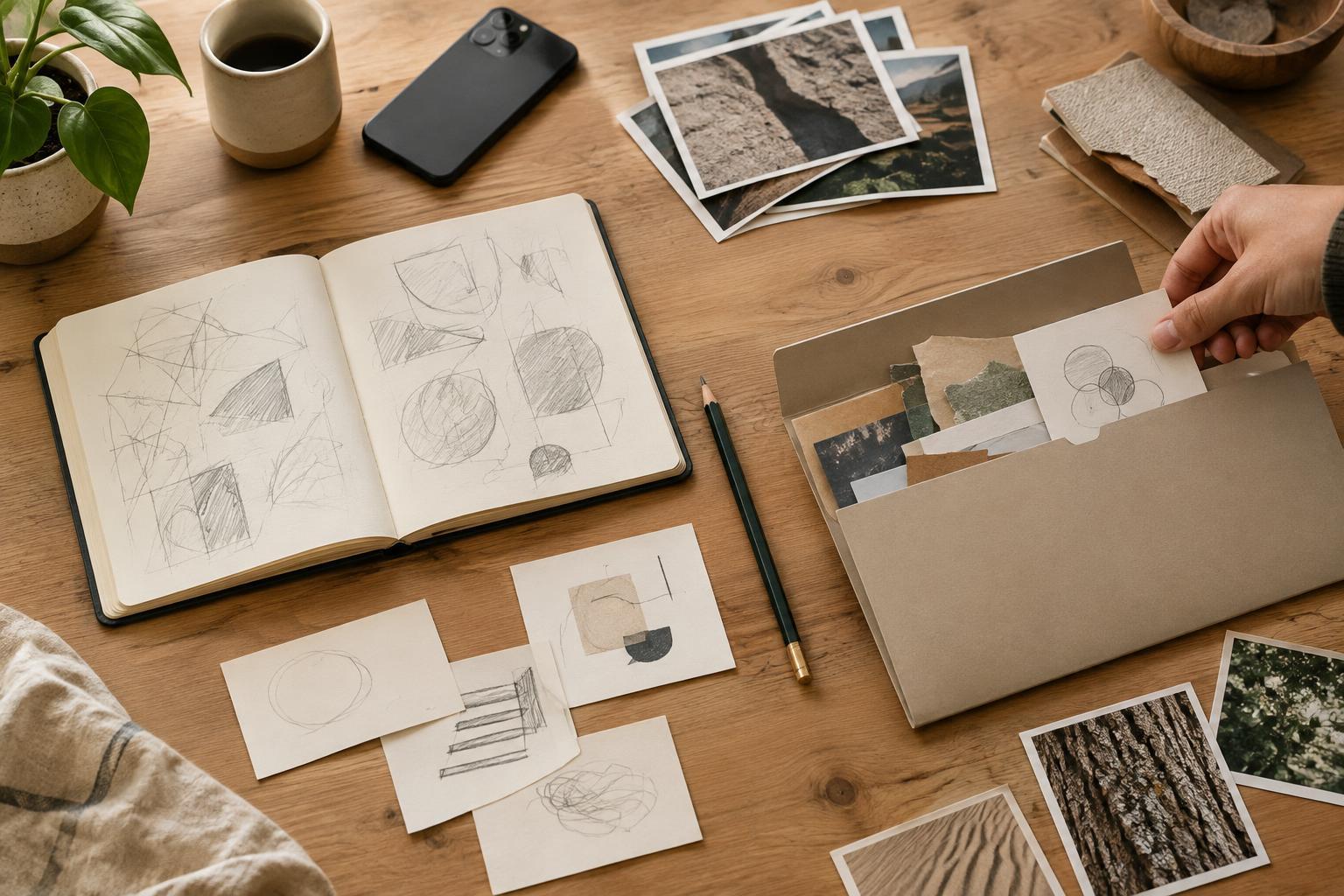
Start with the job the system needs to do
An idea capture system has two jobs: make it easy to save something before you forget it, and make it possible to find that thing when it becomes useful. It does not need to preserve every thought or turn rough material into polished work. A quick drawing of a window shape, a phrase overheard on a walk or a question about a client brief may be worth keeping even if you cannot yet explain why.
Before choosing an app or notebook, think about where your ideas usually appear. If you sketch at a desk but record thoughts while travelling, a single physical notebook may not cover both situations. Choose one convenient capture method for each setting, then decide where everything will eventually come together. For example, you might draw in a pocket notebook, record short voice notes on your phone and move the useful items into one project folder during a weekly review.
Make capture quick and forgiving
Keep the entry point simple enough to use when you have only a minute. For a written note, record the thought in your own words and add just enough context to make it intelligible later. “Soft edges for bakery identity” is more useful than “soft edges”; adding “inspired by the rounded lettering on the shop window” gives you a possible direction to explore. For a sketch, a few labels can preserve what you meant to test: shape, movement, material or mood.
Do not force every item into a category as you collect it. An inbox page or folder called “Unsorted ideas” is a valid temporary home. If a thought belongs to an active project, add a project name; if not, leave it open. Capture first and organise later. This separation matters because deciding where an idea belongs can take longer than recording the idea itself.
Bring different formats into one view
Creative ideas often arrive in incompatible forms: pencil marks, screenshots, photographs, written fragments and audio. You do not have to convert them all into the same format. Instead, give them a shared point of reference. A dated index, a set of project folders or a searchable note collection can tell you what exists and where to find it. A notebook sketch, for instance, might have a short digital entry: “Page 18: overlapping circle marks for packaging concept.”
When saving an image or a reference, write down what caught your attention. “Interesting poster” is hard to act on; “large empty area makes the small title feel deliberate” identifies a visual decision you can test yourself. If the material came from someone else’s work, keep that distinction clear. Your system should help you learn from references without confusing them with ideas you created.
Review with a purpose, not a filing marathon
Set aside a short, repeatable review session. Look through your newest captures and ask three questions: Is this connected to a current project? Is there an experiment I want to try? Can I let it go? Move promising items to a project space, turn testable ones into small actions and leave the rest in an archive or discard them. You do not need a detailed tagging scheme to make these decisions.
A small experiment is more useful than a vague promise to revisit an idea. If you saved a note about using shadows in product photographs, your next action could be “take five test shots with one lamp and a sheet of paper.” If you sketched a possible symbol, try it at both thumbnail and poster size. These tests reveal whether an idea has practical potential while keeping the original note available for another context.
Adjust the system when it stops helping
After a few weeks, notice what you actually use. If voice notes pile up unheard, switch to a shorter text prompt or make listening part of your review. If your notebook is full of drawings you cannot locate, add page numbers and a brief index at the back. If you repeatedly search for ideas by project rather than by medium, organise around projects. The best arrangement is the one that matches how you look for material, not the one with the most features.
Keep the system light enough to survive busy periods. One accessible inbox, a reliable place for active work and a modest review habit are enough to begin. Over time, your collection becomes more than storage: it shows recurring questions, visual interests and unfinished directions. You can use those patterns to choose what to develop next, while still leaving room for thoughts that do not yet have a destination.