Start with a clear question
A random word or image is most useful when it interrupts a familiar way of thinking. On its own, though, a prompt can lead anywhere. Before you begin, write down the question you are trying to answer: “How could this identity feel more welcoming?” or “What visual approach would make this series easier to recognize?” Add any constraints that matter, such as the audience, format or information the work must communicate.
Keep that question visible throughout the exercise. The aim is not to let chance decide the final design. It is to find connections you might not have considered, then test them against the real purpose of the project. If an idea is surprising but makes the message harder to understand, you can set it aside without losing the value of the exploration.
Build a small, varied prompt pool
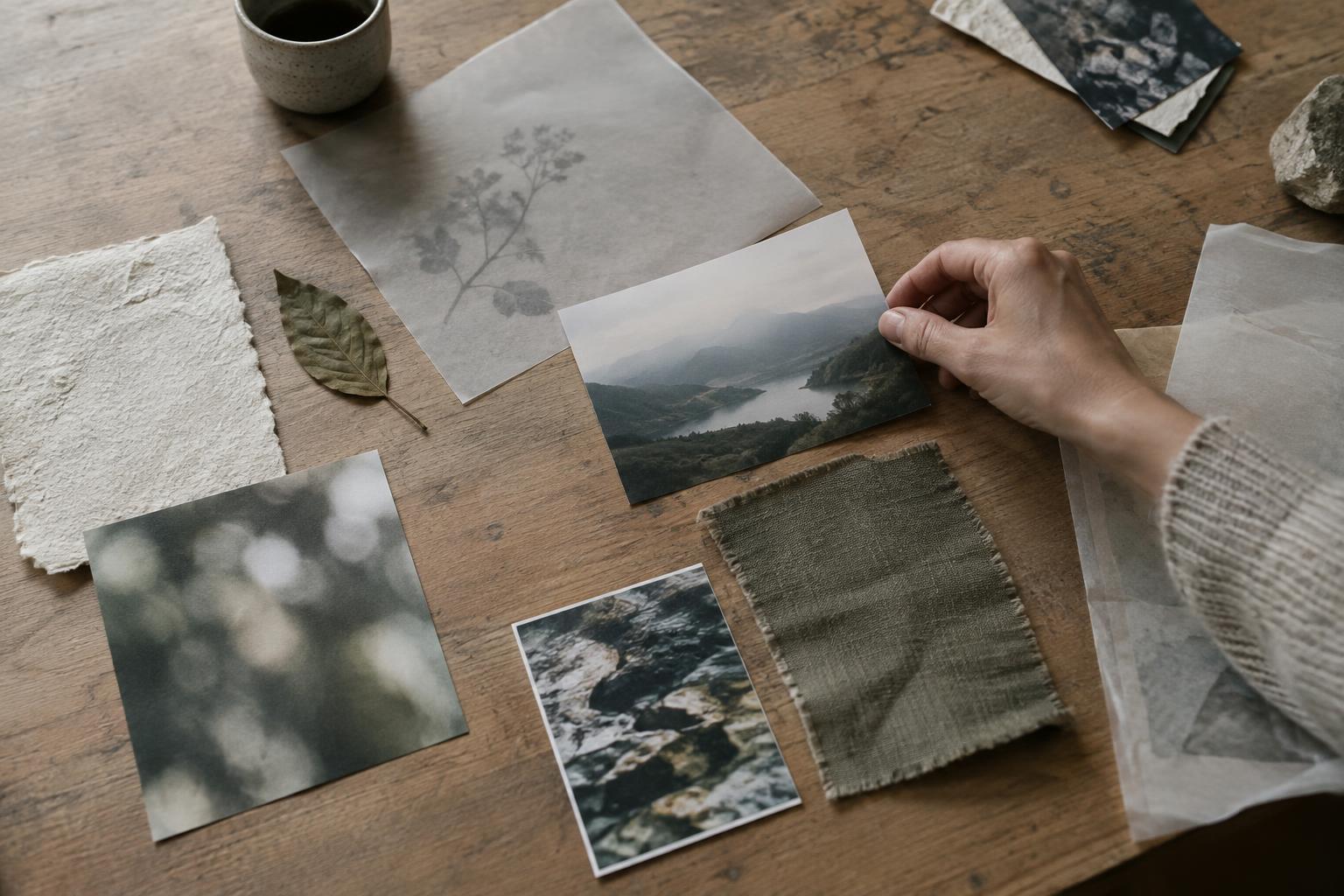
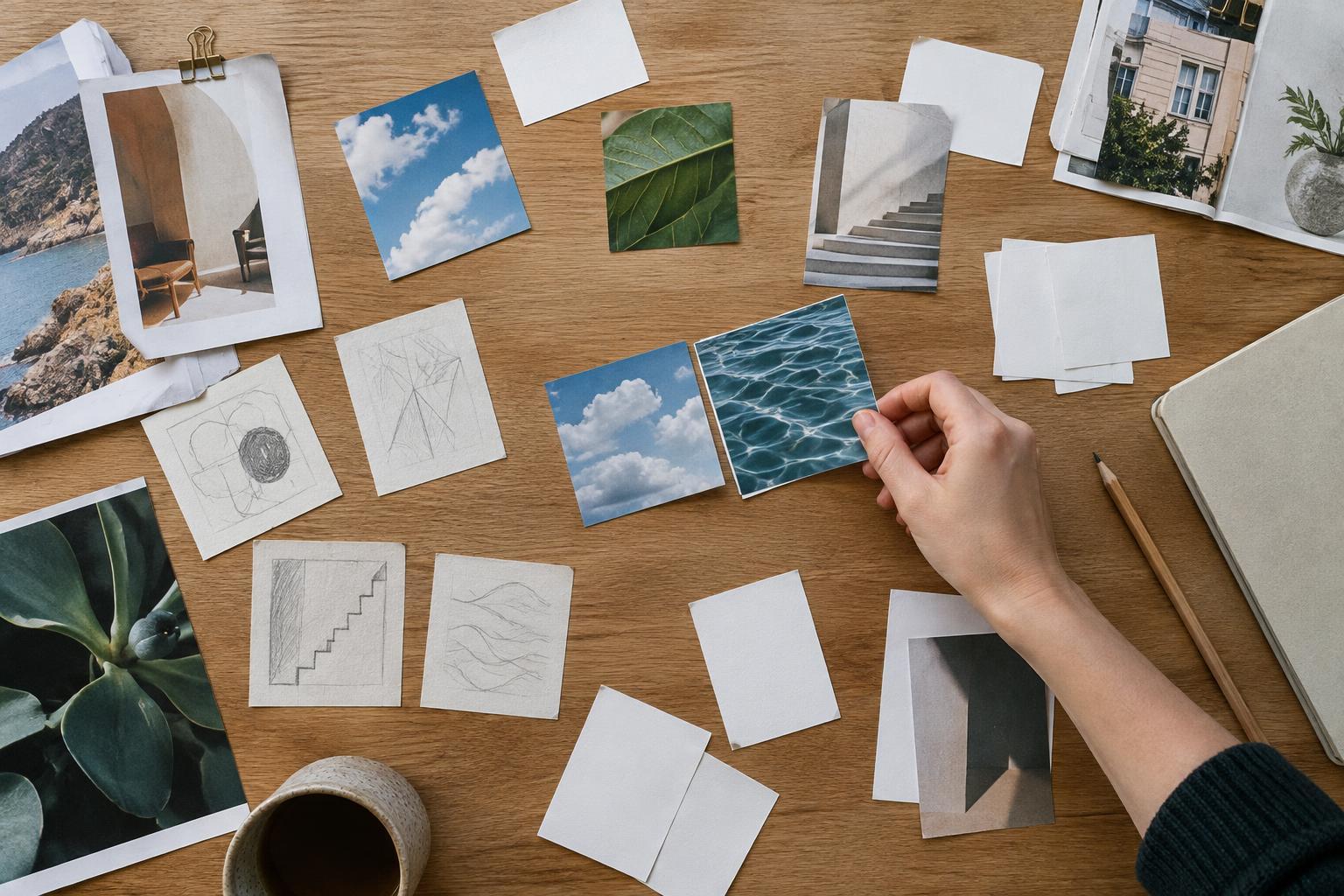
Collect ten to twenty words from outside your usual project vocabulary. A book page, a household object or a list you made in advance can provide starting points. Favor concrete words such as “hinge,” “tide” or “shelter” alongside a few abstract ones such as “patience.” For images, gather a similarly varied set: textures, spaces, objects, gestures or arrangements. Avoid filling the pool with examples from the same design category you are working in; they may pull you toward imitation.
If you are working with others, ask each person to contribute a few prompts without explaining their choices first. Mix the contributions and draw one word and one image at random. When an image comes from someone else’s work, treat it as material for observation rather than something to copy. Note its relationships, rhythm or mood, not just its colors and shapes. You can make the exercise entirely from your own photographs and sketches if that is simpler.
Turn the prompt into specific observations
Give yourself a few minutes to describe the word and image separately. If the word is “hinge,” you might note movement, two connected parts, a point of change and a controlled range. If the image shows a crowded tabletop, you might notice overlap, small groupings and the contrast between orderly and irregular areas. Write what you can actually observe or reasonably associate with each prompt before asking what it could become in the project.
Next, combine one observation from each prompt with your project question. “Controlled movement” and “small groupings” could suggest a visual system whose elements shift between a few consistent positions. For a workshop, they might suggest a sequence in which participants first work in pairs, then rearrange into larger groups. Make three different connections rather than settling on the first one. The less obvious connection may be useful, but it still needs a clear explanation.
Make quick versions before refining
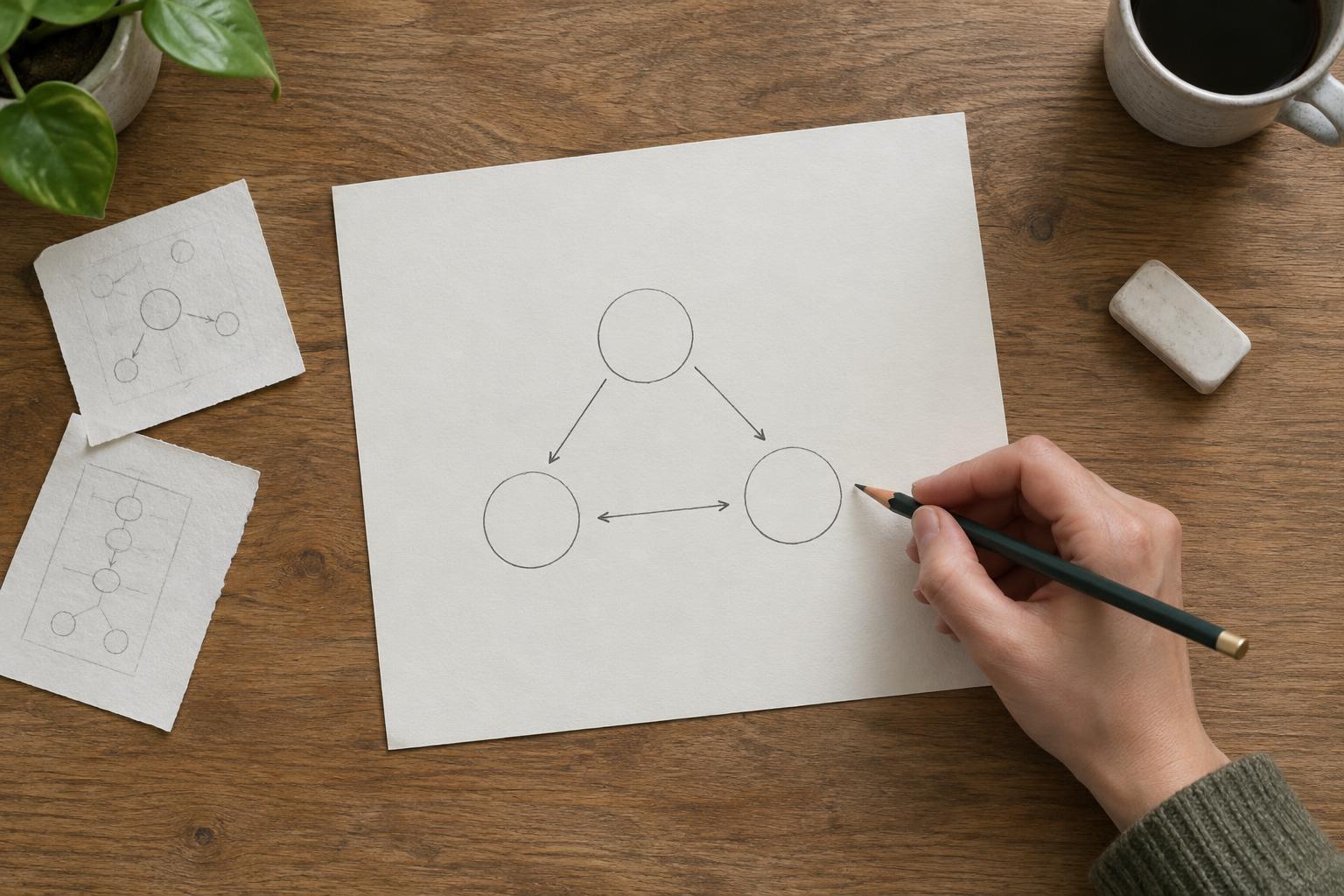
Choose two or three connections and turn each into a rough, visible proposal. For visual work, sketch small layouts, create simple image crops or arrange basic shapes. For a content project, write three possible opening lines or map a short sequence of photographs. Set a modest time limit so you are exploring distinct directions, not polishing one idea too soon. Keep a short note beside each version explaining which prompt observation led to which choice.
If you get stuck, change the question you ask of the prompt. Instead of “What does this image look like?” try “How does it direct attention?” or “What happens between its parts?” This helps translate a prompt into a working principle rather than a decorative reference. You do not need to use both prompts in the final work; their job is to help you find an idea, not to remain visible as evidence of the exercise.
Evaluate the idea, not its randomness
Review the rough proposals against the question and constraints you wrote at the start. Can the intended audience understand the result? Does it communicate the right qualities? Could the approach work across the formats the project requires? Ask someone who was not part of the exercise to describe what they notice first. Their response can reveal a gap between your explanation and what the work communicates on its own.
Save the most useful sketches and a sentence about why each worked, even if you do not develop them now. Also record why you rejected a direction: perhaps it felt too literal, was hard to repeat or distracted from the message. Over time, these notes make the exercise more valuable than a one-off burst of ideas. Random prompts open new paths; careful selection is what turns one of those paths into a usable creative direction.