Decide what your sketchbook is for
A sketchbook does not have to be a record of polished drawings. For a designer or independent creator, it can be a place to notice shapes, test arrangements, collect questions and work out what an idea might become. A page of thumbnail layouts, a rough map of a project or notes beside a photograph all count. Treating the book as a working space, rather than a portfolio, makes it easier to return after a break.
Start by giving the book one or two jobs. You might use it to explore visual identity concepts, plan photographs or capture details you notice on a walk. Write those purposes inside the cover. They are not rules; they are a reminder of why you opened the book in the first place. If your projects change, the book’s purpose can change with them.
Make the first page deliberately easy
An untouched sketchbook can feel more demanding than one that already contains a rough page. Begin with something that does not require drawing skill: make a list of five things you are curious about, tape in a scrap of packaging, or copy three shapes from an object on your desk. Add a note about what caught your attention. The goal is to establish that unfinished thinking belongs here.
Keep your materials simple enough to use wherever the book lives. A pen and one small sketchbook are sufficient; adding colour or collage can wait. If a blank page still feels intimidating, divide it into six boxes and fill only one. A small frame gives an idea a starting point without asking it to fill the whole spread.
Use prompts tied to work you already do
A sustainable practice is easier to maintain when it connects to real creative questions. Before developing a logo, draw several quick shapes that express the qualities a client wants to convey. When preparing a photo shoot, sketch three possible crops or lighting directions. For a workshop, diagram how participants might move between activities. These marks need only be clear enough for you to compare options.
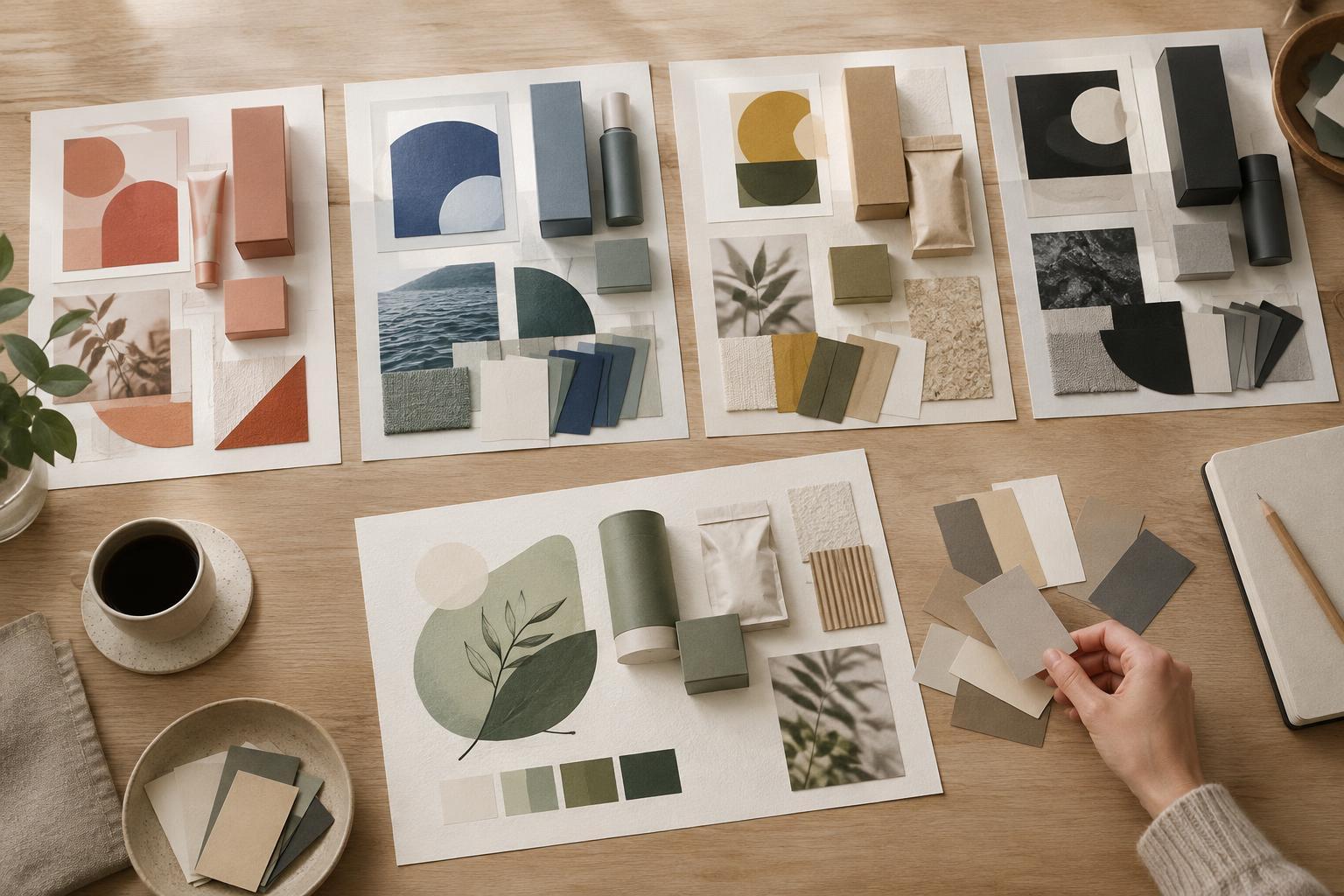
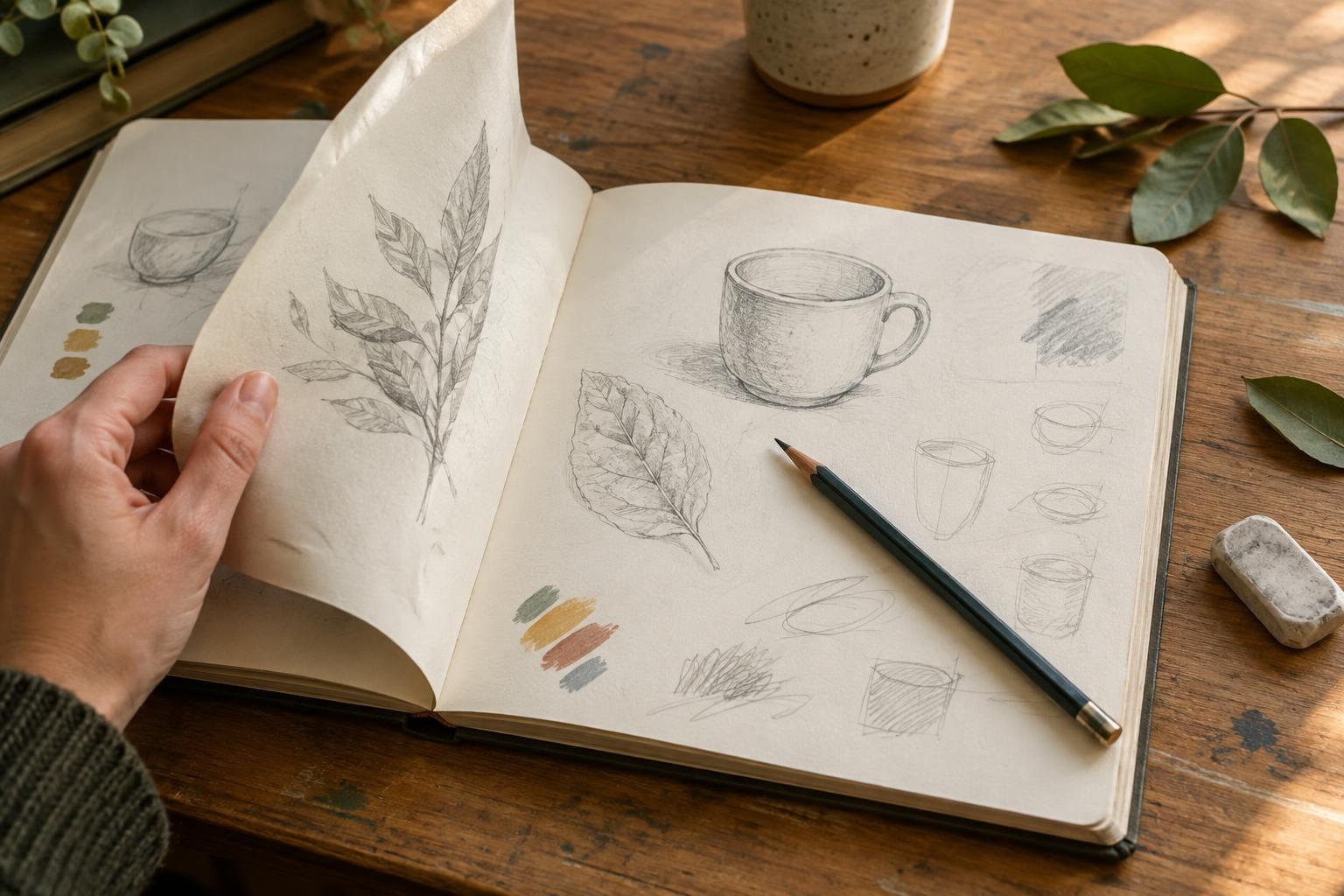
On days without a project, try a short observation prompt. Draw the negative space between two objects, record the lettering on a sign, or arrange four found colours into a palette. You can also write instead of drawing: describe a texture, name a contrast you noticed or ask what makes an image feel calm. Set a modest limit, such as one page or ten minutes, so the exercise has a natural stopping point.
Build a return habit, not a streak
If you do not draw every day, a daily target may turn a helpful tool into another unfinished task. Choose a trigger that fits your schedule instead: open the book when starting a new brief, after visiting a place that interests you or before a weekly planning session. Keep it somewhere you will encounter it at that moment. The prompt to begin matters more than the number of days between pages.
When you return after a gap, do not try to account for the missing time. Date the next page if dates are useful to you, then start with the question in front of you. A sketchbook with uneven use can still show how ideas develop across projects. Blank stretches are not evidence that the practice has failed; they simply mean the book was not the tool you needed then.
Review pages for ideas worth developing
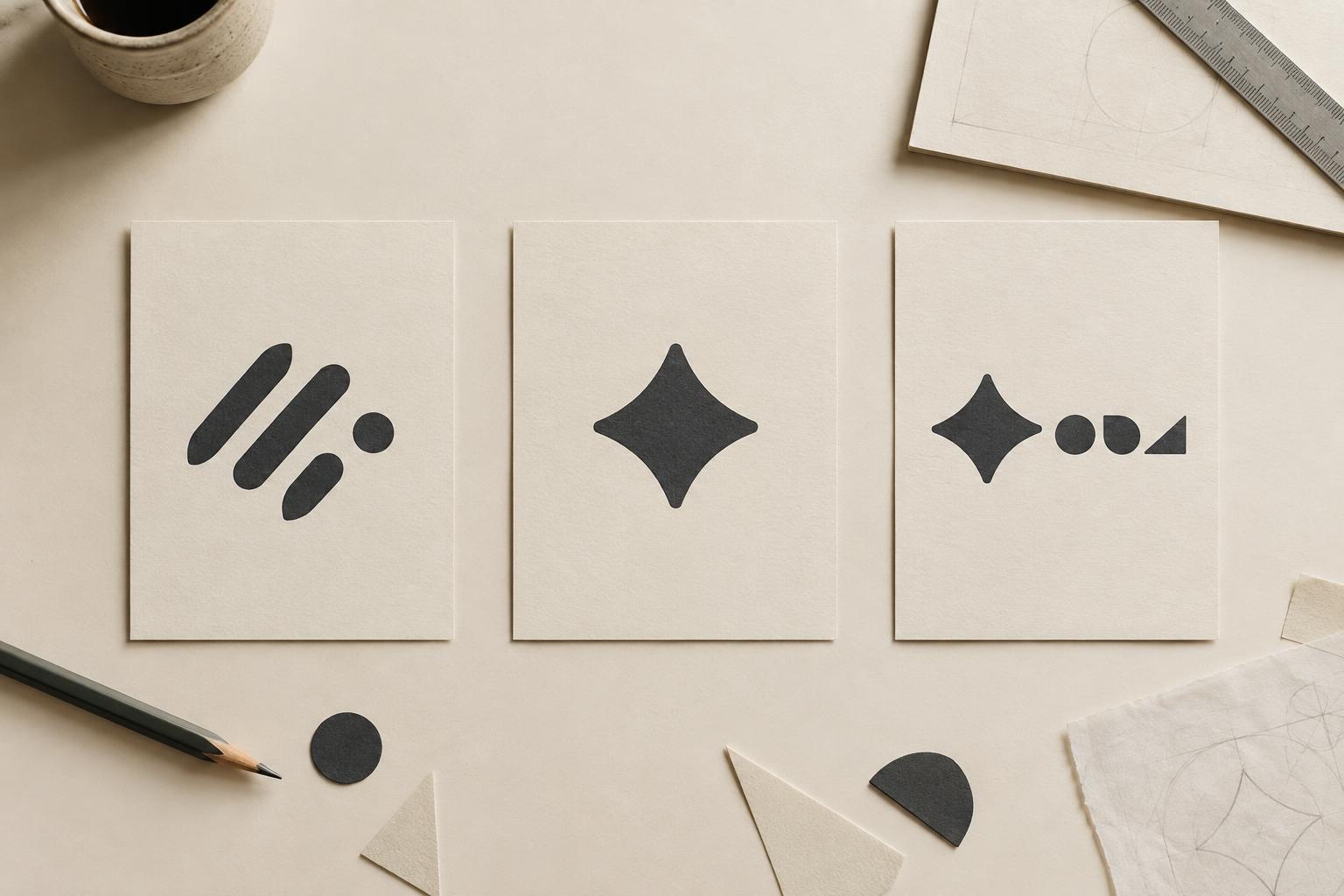
Every few weeks, leaf through what you have made and mark anything that still holds your attention. Look for recurring shapes, questions you have not answered or quick experiments that could be tested at a larger scale. You might draw a small star beside a promising layout and write one next step, such as “try this with type” or “photograph from a lower angle.” This turns the book into a source of decisions, not just a place to store fragments.
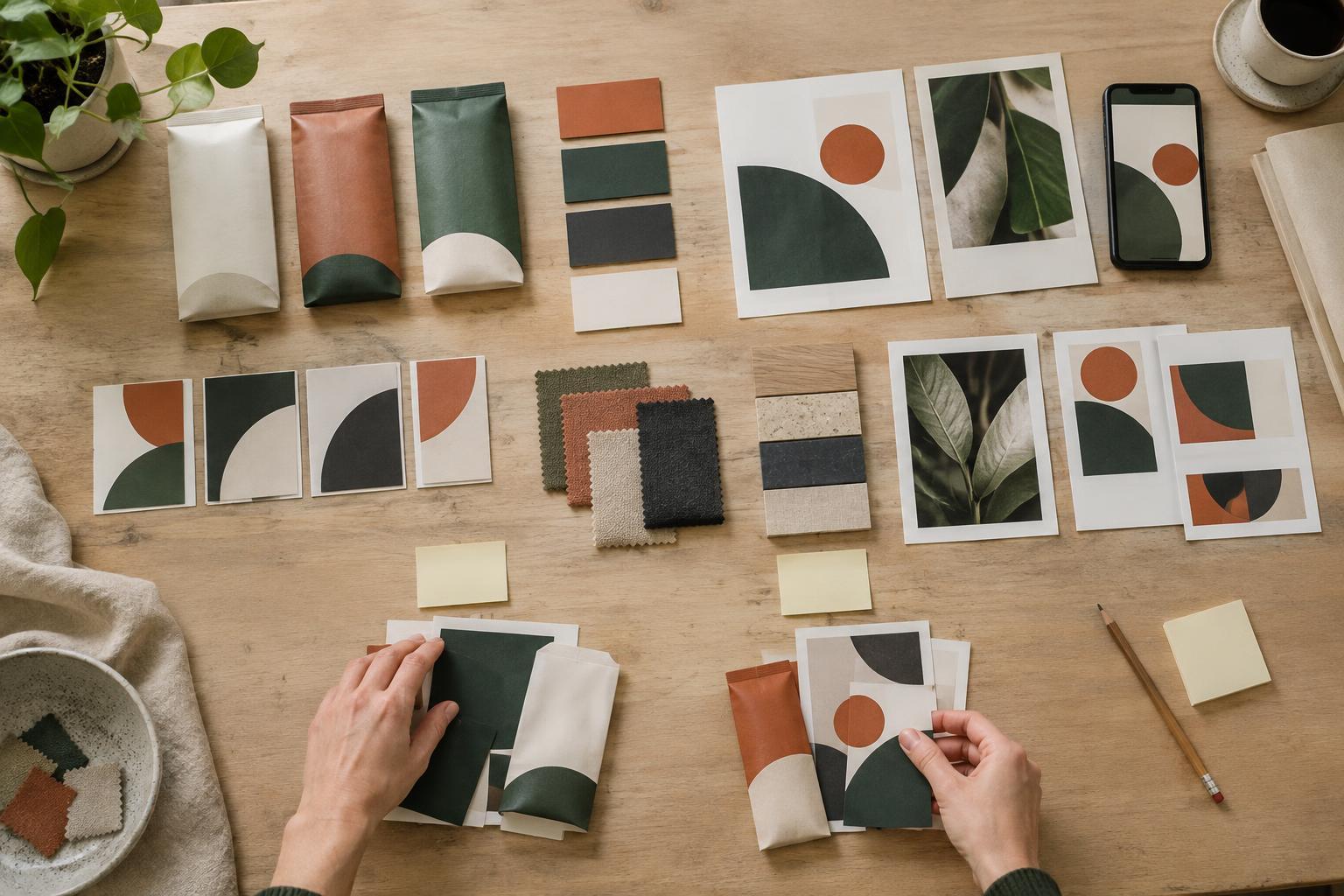
You can also use a page to communicate an idea to a collaborator. Photograph a rough sketch and explain what it explores, rather than presenting it as a finished direction. Keep room for the other person to respond or make a version of their own. The value of a sketchbook practice is not how often you fill pages; it is how readily you can make an idea visible, examine it and move it forward.