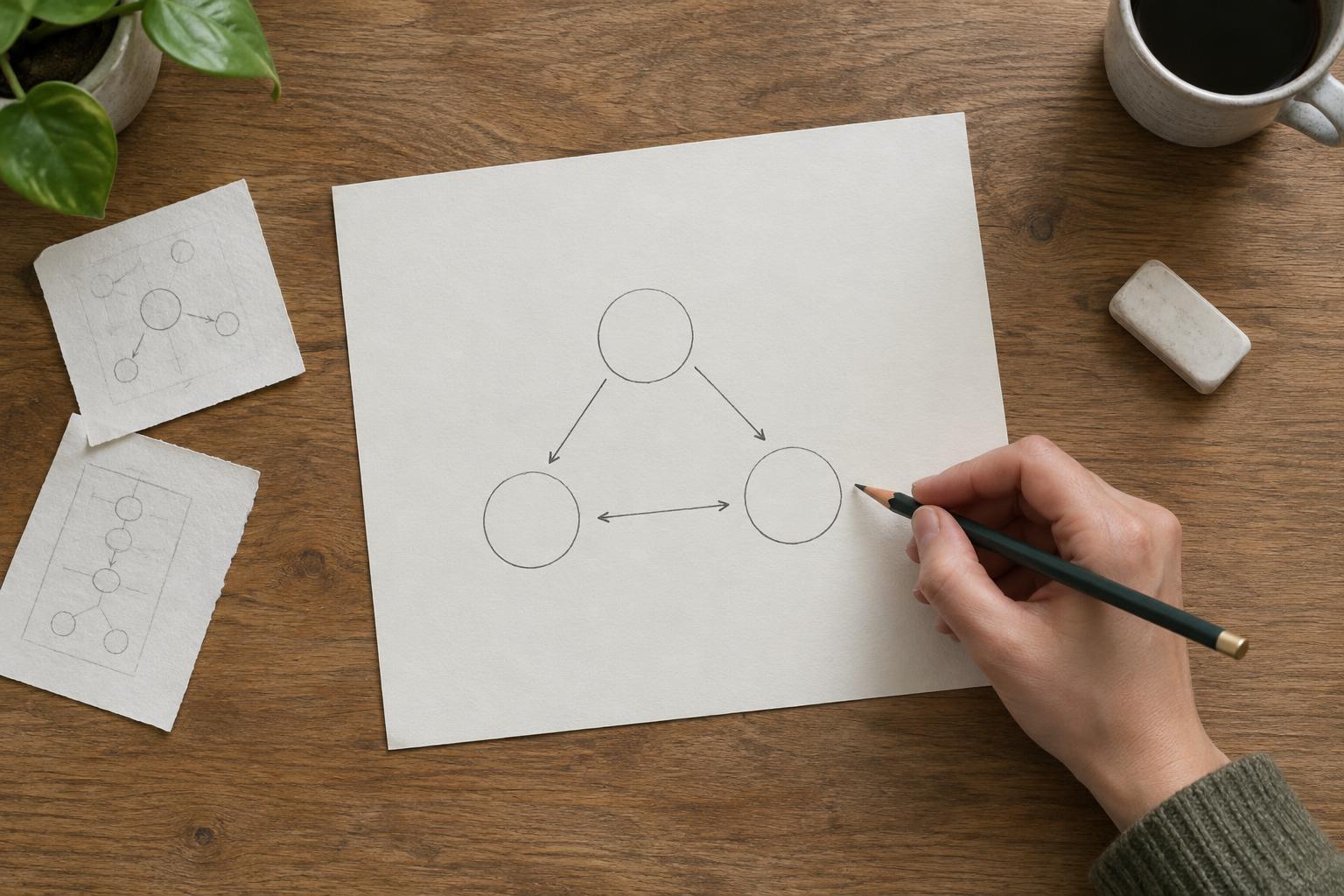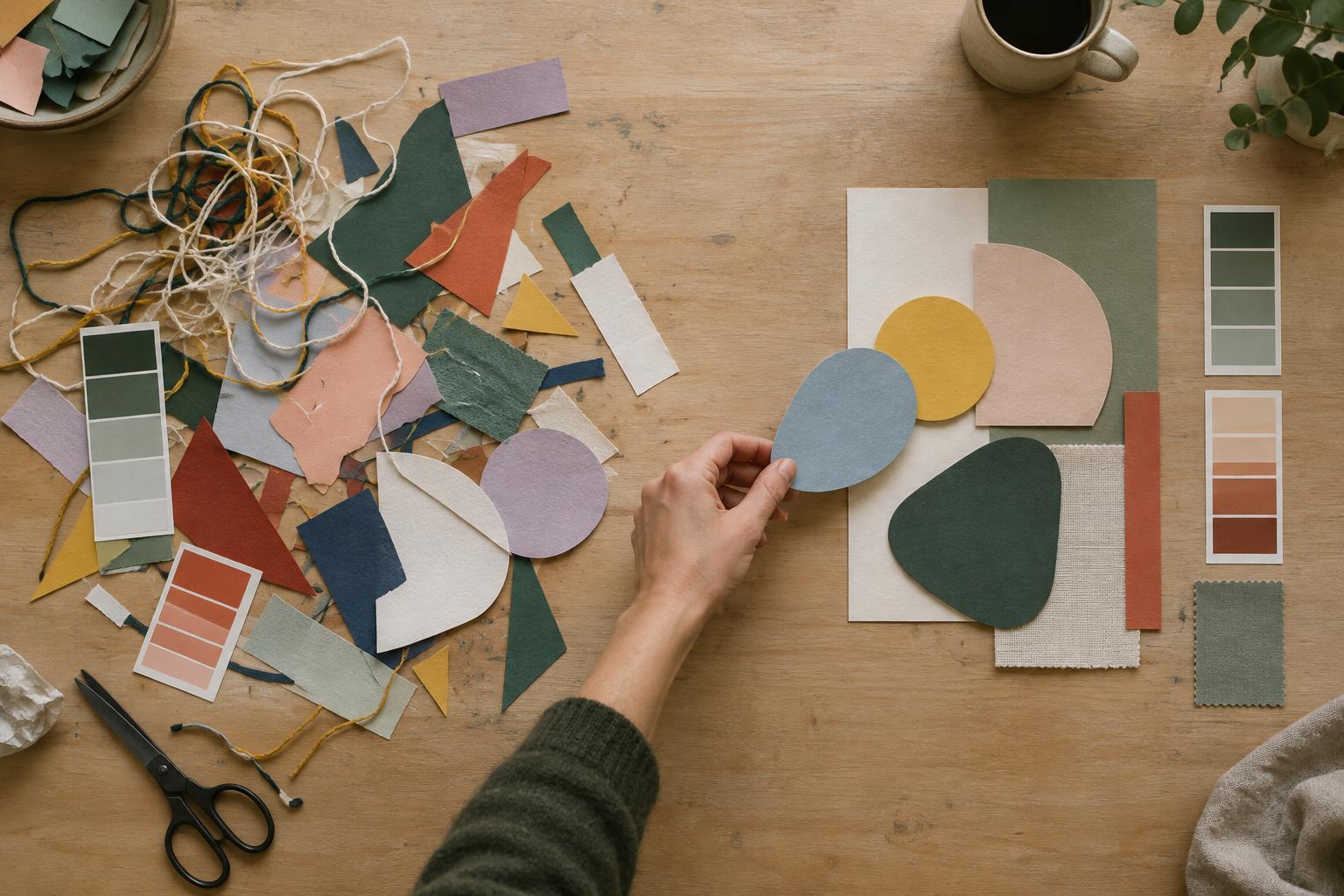
Start with the result you do not want
Most creative sessions begin with a positive question: How might we make this clearer, more memorable or more useful? Reverse thinking temporarily asks the opposite. What would make the result confusing, forgettable or difficult to use? The aim is not to produce bad work. It is to make familiar problems visible so you can approach them from a different direction.
For example, a team developing a visual identity for a neighborhood arts program might ask, “How could we make newcomers feel that this program is not for them?” Answers could include using unexplained insider language, hiding practical details, or choosing imagery that shows only one type of participant. Those answers reveal decisions the team can examine. Some will suggest straightforward fixes; others may lead to a more distinctive idea for how the program welcomes people.
Set a useful boundary for the exercise
Choose one specific outcome before brainstorming. “Make the project fail” is too broad to be useful. “Make it hard for someone to understand what this workshop offers” gives people something concrete to explore. Write down the intended audience and where they will encounter the work, such as a poster, a landing page or a social post. A defined setting makes the deliberately bad ideas easier to interpret.
Then give the group a short period to generate answers without defending them. Participants can work alone first and share afterward, which helps prevent the first suggestion from setting the direction for everyone else. Encourage observations about choices and experiences rather than jokes at a person’s expense. The exercise works best when people can name weak decisions without treating a colleague, client or audience as the problem.
Turn bad ideas into design questions
Once you have a list, group similar answers. A cluster of complaints about tiny text, crowded layouts and vague labels may point to a larger issue: important information is difficult to find. Instead of simply reversing every statement, ask what need it exposes. “Bury the workshop location” becomes “What must a visitor be able to find immediately?” That question can guide layout, copy and a quick review of the finished piece.
Other answers may reveal an opportunity rather than a rule. If the worst identity would make every event look identical, the team might explore a flexible system that allows each workshop to have its own character while keeping essential details consistent. The useful move is from provocation to possibility: name the failure, identify the underlying need, and sketch more than one way to meet it.
Try it on a real creative brief
Imagine a small studio planning a photo series for a maker’s new product. The intended result is a set of images that helps customers understand the object and its materials. The reverse prompt is, “How could these photographs leave viewers unsure what they are looking at?” The studio lists extreme close-ups without context, inconsistent scale, distracting props and lighting that obscures the surface.
The team then converts that list into a shot plan. One image shows the full object, another shows it in use, and a detail image makes the material visible. They may still choose an abstract image for atmosphere, but it now has a clear role alongside the explanatory photographs. Reverse thinking has not dictated a style; it has helped the studio decide which questions the images need to answer.
Choose what to carry forward
Finish by selecting a few promising ideas to test, not by treating the reversed list as a complete strategy. Ask whether each option serves the audience, fits the brief and can be made with the time and resources available. A quick sketch, draft headline, sample layout or trial photograph may be enough to expose a weakness before the team commits to a direction.
Keep a record of the original reverse prompt and the decisions it influenced. This makes feedback easier to discuss: instead of saying a design “doesn’t work,” a reviewer can point to the specific confusion the team set out to avoid. Used this way, imagining the worst result is a practical method for finding clearer questions—and, from those questions, stronger creative choices.