Start with a decision, not a blank canvas
A remote workshop works best when everyone knows what they are there to make or decide. “Explore the brand” is broad enough to produce an interesting conversation but little direction. A more useful aim might be to identify two promising visual directions for a new identity, select images for a campaign concept, or agree on the qualities a set of photographs should convey. Write that aim at the top of the shared workspace, along with what the group will produce by the end.
Decide who needs to attend and what each person can contribute. A designer may bring draft concepts, a project lead may explain constraints, and someone closer to the audience may notice where an idea could be misunderstood. Keep the session’s scope realistic: a workshop can compare directions and expose questions, but it may not be the right place to finish a design. If final approval sits elsewhere, say so before people begin.
Build a visual workspace people can navigate
Prepare one shared space with a simple route through it: purpose, reference materials, exercises, discussion, and outcomes. Number the areas so participants can find their place when the facilitator says, “Move to exercise two.” Include short instructions beside each activity rather than relying on spoken directions alone. Test that invited participants can open the space and add comments before the session starts.
Curate visual materials for a specific question. To discuss an identity direction, for example, show a small selection of type, colour, layout, and image references with notes about what each is intended to illustrate. Label references as prompts rather than proposed solutions; otherwise, participants may spend the session voting for an existing design. Give each item enough context to be understood without a lengthy presentation, and keep source images distinct from participants’ own ideas.
Not everyone will be able or comfortable working directly on a visual board. Provide an alternative way to contribute, such as speaking while the facilitator records a note or sending a written comment. Make text legible at a comfortable zoom level, avoid using colour as the only way to distinguish categories, and describe important images aloud. These small preparations help the group focus on ideas rather than on navigating the workspace.
Use exercises that turn reactions into useful input
Open with a brief orientation: show the goal, the route through the board, and how contributions will be captured. Then give participants a few quiet minutes to inspect the materials before discussion. This prevents the first person to speak from setting the tone for everyone else. A helpful first prompt is, “Which reference feels closest to the intended audience, and what specific feature makes you say that?”
Move from individual observations to comparison. Ask each person to place a note beside one reference they would develop and one they would question. Encourage them to name a visible feature, such as spacing, contrast, cropping, or tone, and connect it to the project aim. “This feels friendly” becomes more useful when paired with “because the loose composition makes the subject feel approachable.” The facilitator can group similar observations without treating every note as a vote.
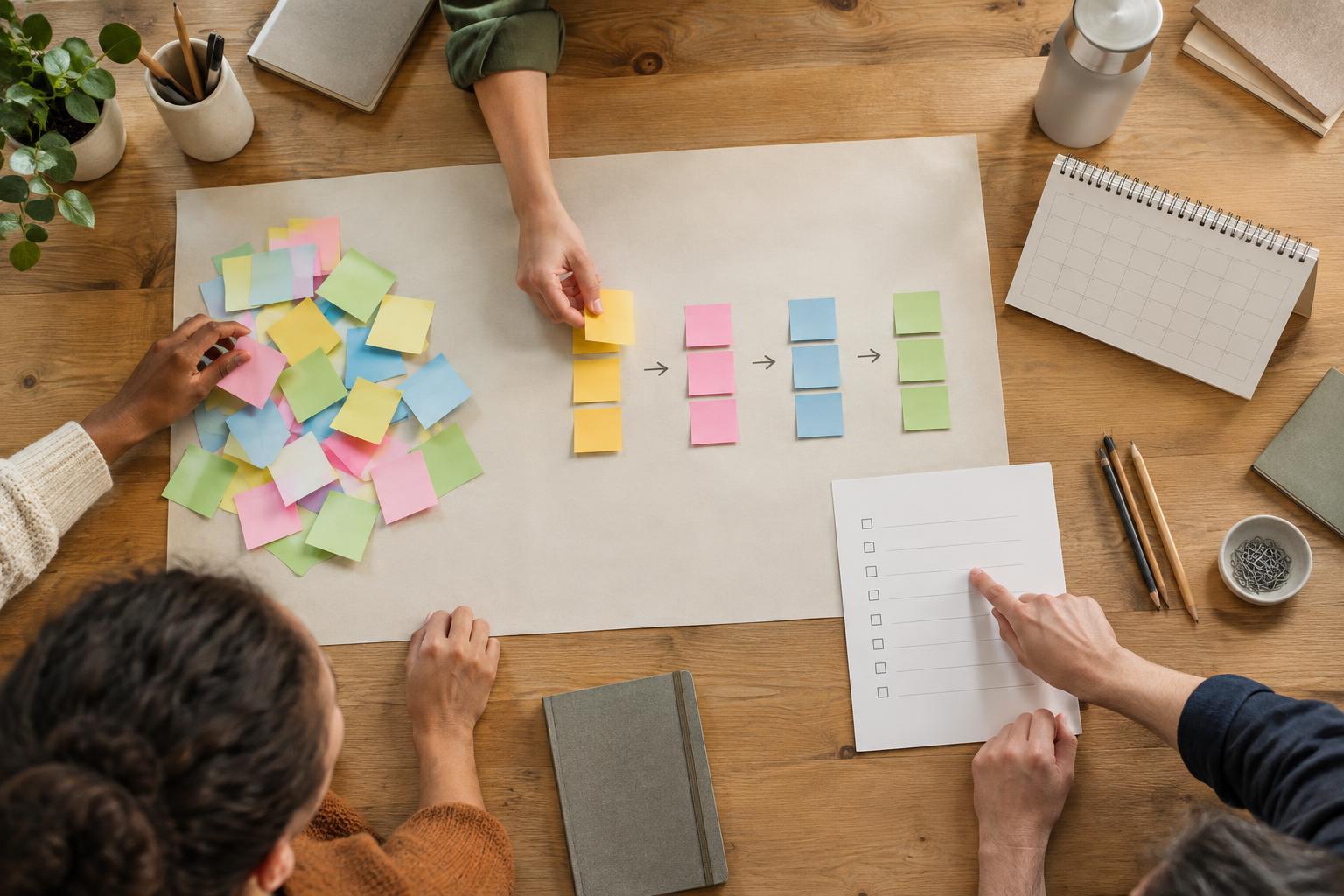
For a development exercise, create two or three empty frames labelled as possible directions. Invite participants to move copies of references, add sketches, or write short descriptions within them. Ask what each direction would need to achieve and what could make it fail. The aim is not to produce polished concepts on the call. It is to make the reasoning behind each possibility visible.
Facilitate the conversation without losing the thread
Assign someone to guide the discussion and, if possible, someone else to capture notes. The facilitator should bring the group back to the stated aim when conversation drifts, invite quieter participants to contribute, and distinguish personal taste from project requirements. If a comment is vague, ask what the person sees and what effect they expect it to have. If two people disagree, record both reasons before trying to resolve the difference.
Leave space for uncertainty. A note such as “promising, but needs testing at small sizes” is more honest than a forced yes or no. Keep a visible area for open questions so they do not repeatedly interrupt the exercises. When the group needs to choose, restate the options and the criteria agreed at the start. Capture the reason for a choice, not just the choice itself; that reasoning will help the team develop the work after the call.
Close with a usable record and clear next steps
Reserve the final part of the session for a recap. Point to the directions the group wants to explore, the ideas it has set aside, and the questions still unanswered. Confirm who will take each next step and what material they need: a revised concept, a set of image tests, or feedback from someone who could not attend. Avoid treating a crowded board as a finished outcome.
After the workshop, tidy the workspace without erasing the path the group took. Move key references, decisions, reasons, and open questions into a short summary that people can understand without replaying the conversation. Keep the fuller board available as working context. A successful remote workshop leaves participants with more than a collection of images: it gives them a shared explanation of what to develop and why.