Notice who shapes the room before the workshop begins
A creative workshop can appear open while a few people quietly determine its direction. A client may control approval, a creative director may set the tone, and a confident speaker may offer the first interpretation of every idea. Others might hold back because they need time to think, disagree with a senior colleague or are unsure whether their perspective is wanted. Silence is not evidence that someone has nothing to contribute.
Before planning activities, identify who will attend and what authority each person has over the work. Ask the project owner which decisions the group can genuinely influence and which constraints are fixed. If a workshop is intended to explore options rather than approve one, say so plainly. You can also invite participants to send questions or concerns in advance. This gives the facilitator a fuller picture without requiring anyone to challenge a hierarchy in front of colleagues.
Set rules that make participation predictable
At the start, explain the purpose of the session, the decisions it should inform and what will happen to the ideas afterward. Agree on a few working rules: let people finish, discuss the work rather than the person, and treat early suggestions as material to develop rather than proposals to defend. Be clear that participants may pass during a speaking round and contribute in writing instead. Predictability reduces the pressure to seize an opening before the conversation moves on.
The facilitator should also name their own role. If they are there to gather input, they should avoid signalling a preferred answer too early. If the most senior attendee has a strong view, consider asking them to listen while others share initial responses. This does not remove their authority, but it can prevent their first comment from becoming the answer everyone feels expected to support. Agree on how the final decision will be made so participants do not mistake an invitation to contribute for a promise of equal voting power.
Start with individual thinking, then share in stages
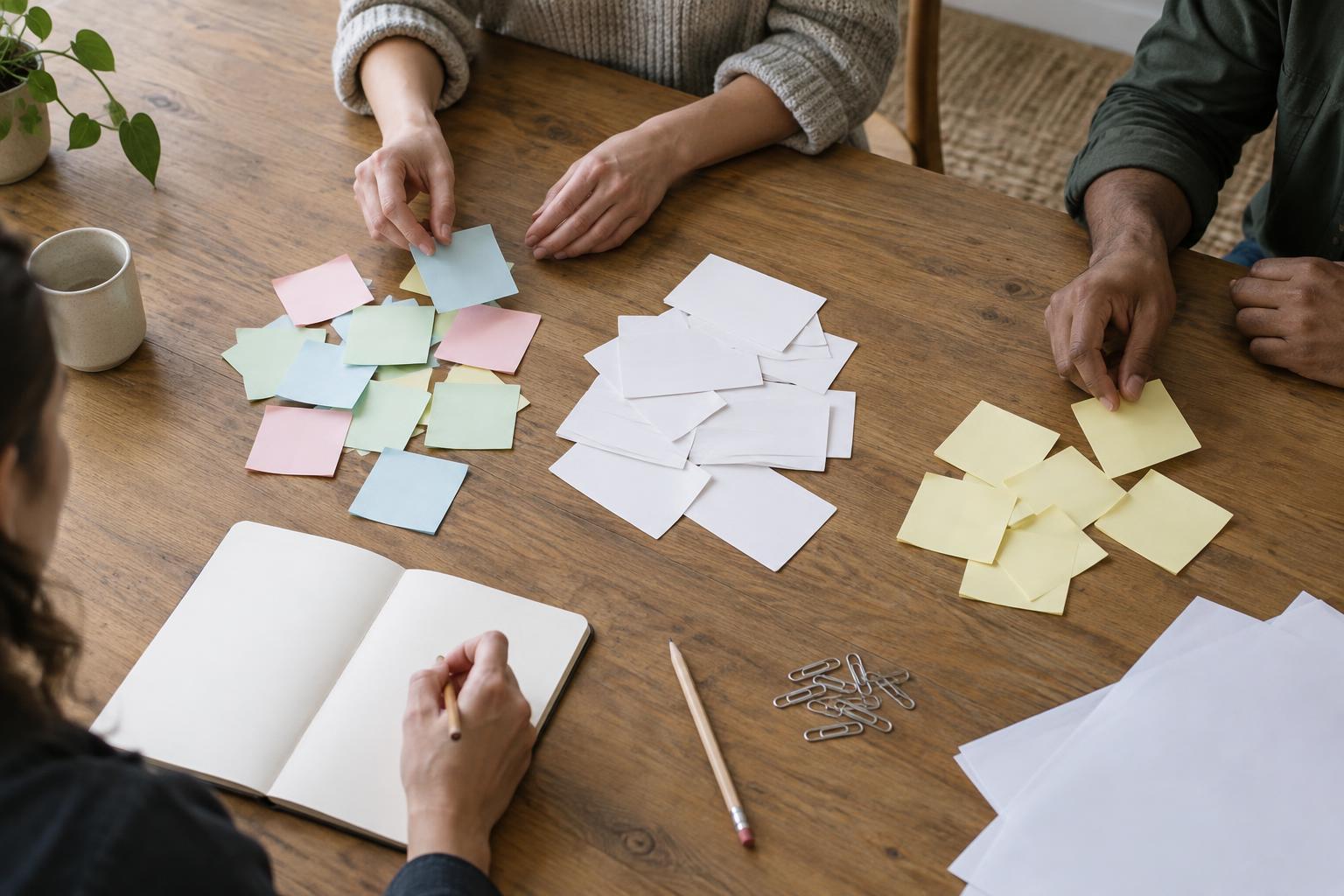
Instead of opening with “Any ideas?”, give everyone the same specific prompt and a few quiet minutes to respond. In a visual identity workshop, for example, ask participants to note three qualities the identity should communicate and one impression it should avoid. They can write, sketch or select reference images, depending on the task. Individual work produces material before the fastest speakers establish a direction.
Next, move into pairs or small groups before discussing ideas as a whole room. Ask each group to bring forward points of agreement and useful differences, rather than only its favourite answer. For a group discussion, invite one contribution per person before returning to anyone for a second. A round like this can broaden input, provided passing is welcome. Collect written responses as well; reading several aloud without naming their authors can help the group examine ideas on their merits, though anonymity should never be promised if the setting cannot support it.
Intervene when influence becomes uneven
Watch for patterns as well as interruptions. Does one person repeatedly reframe other people’s suggestions? Are ideas acknowledged only when a senior colleague repeats them? Does a question about practical constraints shut down exploration before alternatives are considered? A facilitator can respond without embarrassing anyone: “Let’s capture that constraint, then hear two more approaches,” or “I want to return to the point raised earlier about the audience.” Recording contributions visibly helps preserve their origins and prevents a useful idea from disappearing in a rapid exchange.
Avoid calling on a quiet participant without warning to explain why they have not spoken. Instead, offer a choice to the whole group: another minute to write, a chance to add to the board, or an optional final round. If someone is interrupted, return the floor to them and let them decide whether to continue. The goal is not to give everyone identical airtime; it is to ensure that speaking style or job title does not determine which insights the project can use.
Show what happened to the input
At the end, distinguish between ideas generated, questions still open and decisions actually made. Summarise the range of views, including meaningful disagreements, rather than presenting the loudest position as a consensus. Ask participants to check whether the summary misses anything. If possible, leave a short window for written additions after the session; some people recognise their strongest point only once they have had time to reflect.
In the follow-up, explain which ideas will be developed, which cannot be used and why. For example, a proposed photography approach may be set aside because it conflicts with the agreed production scope, while its underlying goal of showing more human interaction may shape another option. This kind of traceable response gives contributions weight even when they are not selected. A workshop cannot erase every power difference, but its process can make those differences less likely to decide whose ideas are heard.