Start with the decisions, not the workshop activities
Co-creation works best when it gives people a meaningful way to shape the work, rather than inviting everyone to make every choice. Before planning a workshop, list the decisions the project needs: the audience to prioritise, the message to communicate, the visual direction to explore and the final design to approve. Then name who will contribute to each decision and who is responsible for making it.
For a small identity project, a client may be best placed to explain their customers and business priorities, while a designer leads the translation of those insights into visual options. The client might select a direction after discussing its strengths and trade-offs. Write this arrangement in plain language and share it before the session. People can participate more openly when they know whether an exercise is gathering ideas, testing assumptions or leading to a decision.
Agree on boundaries that make participation useful
A clear brief gives collaborators room to contribute without reopening the whole project at every meeting. Identify what is fixed, what is open and what needs investigation. Fixed elements might include an existing name or required format. Open questions might include the tone of a campaign or the kinds of images that feel appropriate. If a requirement is still uncertain, label it as an assumption to check rather than treating it as settled.
Ask the client to identify one person who can consolidate feedback and confirm decisions on their side. This does not prevent colleagues from contributing; it gives their contributions a route into the project. Also agree on practical limits: how many directions will be developed, when feedback is due and what happens if a new request changes the agreed scope. These boundaries protect time for exploration and make later changes easier to discuss without assigning blame.
Design exercises that reveal reasons, not just preferences
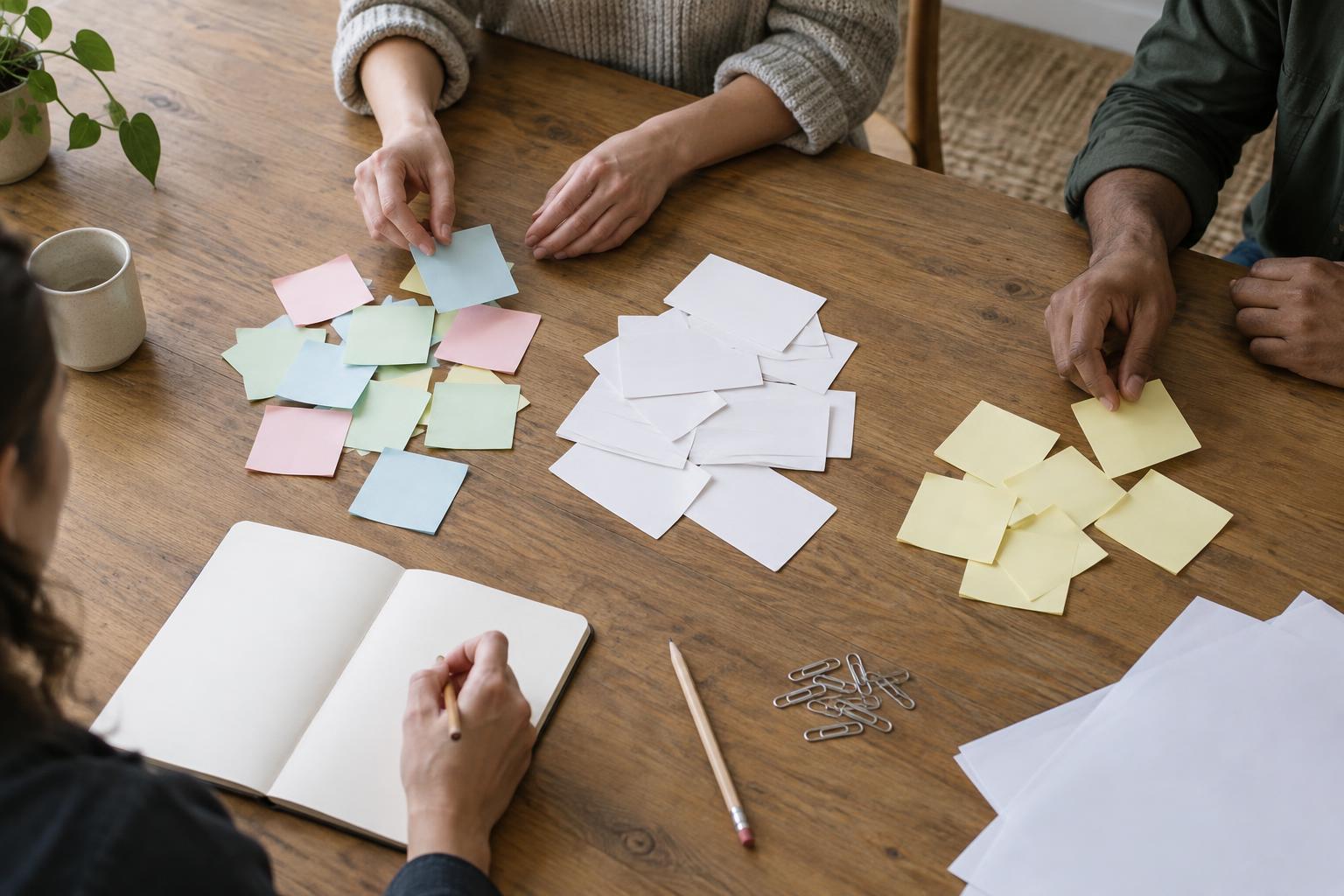
Workshop exercises should help the team understand what participants are trying to achieve. Instead of asking everyone to pick a favourite colour or sketch a logo, ask them to describe the impression a first-time visitor should take away. Have participants sort sample images by qualities such as approachable, precise or energetic, then explain their choices. The explanations are more useful than a vote: two people may choose the same image for entirely different reasons.
Keep the activities short and move from individual reflection to group discussion. Quiet writing gives each person a chance to form a view before louder voices set the direction. A facilitator can capture recurring themes, points of disagreement and questions requiring follow-up. If someone proposes a specific design solution, ask what need it would address. That turns “make the logo bigger” into a discussion about visibility, hierarchy or confidence.
Turn shared input into a small set of considered options
After the workshop, the creative team needs space to interpret the input. A client’s words, image choices and examples are evidence of what matters to them, not a ready-made design specification. Summarise the main themes in a short note and show how they will guide the next stage. Where ideas conflict, explain which question remains open rather than quietly choosing a side.
Present a manageable number of directions, each tied to the agreed goals. For example, a neighbourhood café might want to feel welcoming without looking informal. One direction could use warm photography and restrained typography; another might use a bolder graphic system with conversational copy. Show how each direction handles the tension, including any drawbacks. This helps the client compare approaches against the brief instead of reacting only to personal taste.
Make feedback and final decisions visible
At each review, remind participants what decision is being made. Are they choosing a direction, identifying problems to solve or approving finished files? Request feedback against the project goals: what communicates well, what feels unclear and what evidence supports a concern. Gather comments in one place and distinguish essential changes from suggestions worth exploring. If feedback conflicts, ask the designated client decision-maker to resolve the priority before the team revises the work.
Close the loop after each significant discussion with a brief record of the decision, the reasons for it and the next step. Note which ideas were not taken forward and why, especially when participants invested time in developing them. Co-creation does not require every suggestion to appear in the final result. It requires people to see that their contributions were heard, evaluated and used within a process whose responsibilities remain clear.