Start with one clear purpose
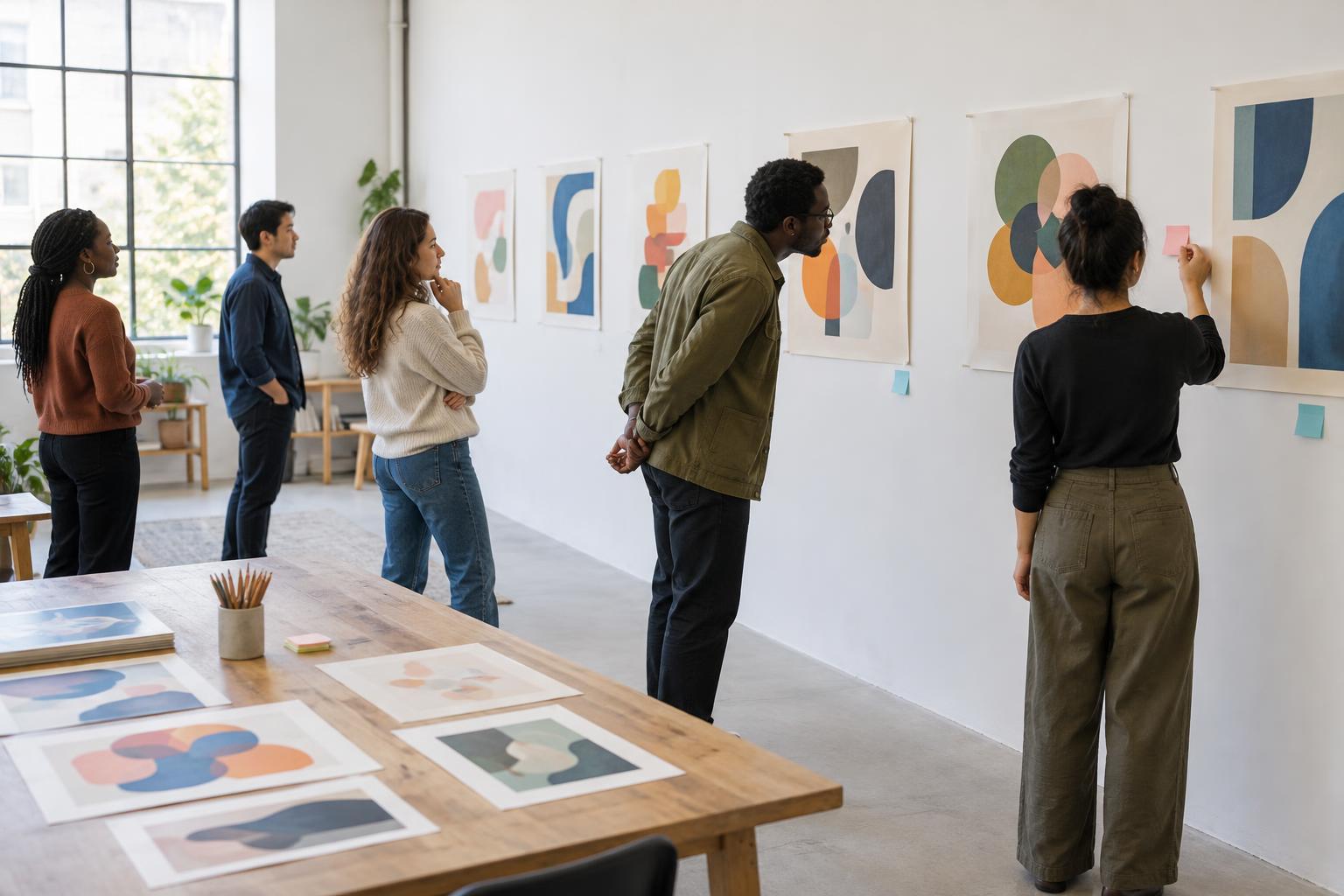
A gallery walk is a workshop activity in which people move between displayed pieces of work, leave observations and then discuss what they noticed. It is useful when a team needs feedback on several visual directions, early drafts or parts of a shared project. The quiet review comes before group discussion, giving each person a chance to form an impression without immediately following the first speaker’s opinion.
Decide what the walk should help you learn before inviting participants. You might want to know whether different concepts communicate the intended tone, where a visitor’s attention goes first or which parts of a proposed experience are confusing. Keep the question narrow enough to act on. “Which direction is best?” may prompt quick preferences; “What does each direction suggest about the audience and purpose?” is more likely to reveal useful differences.
Prepare work that people can compare fairly
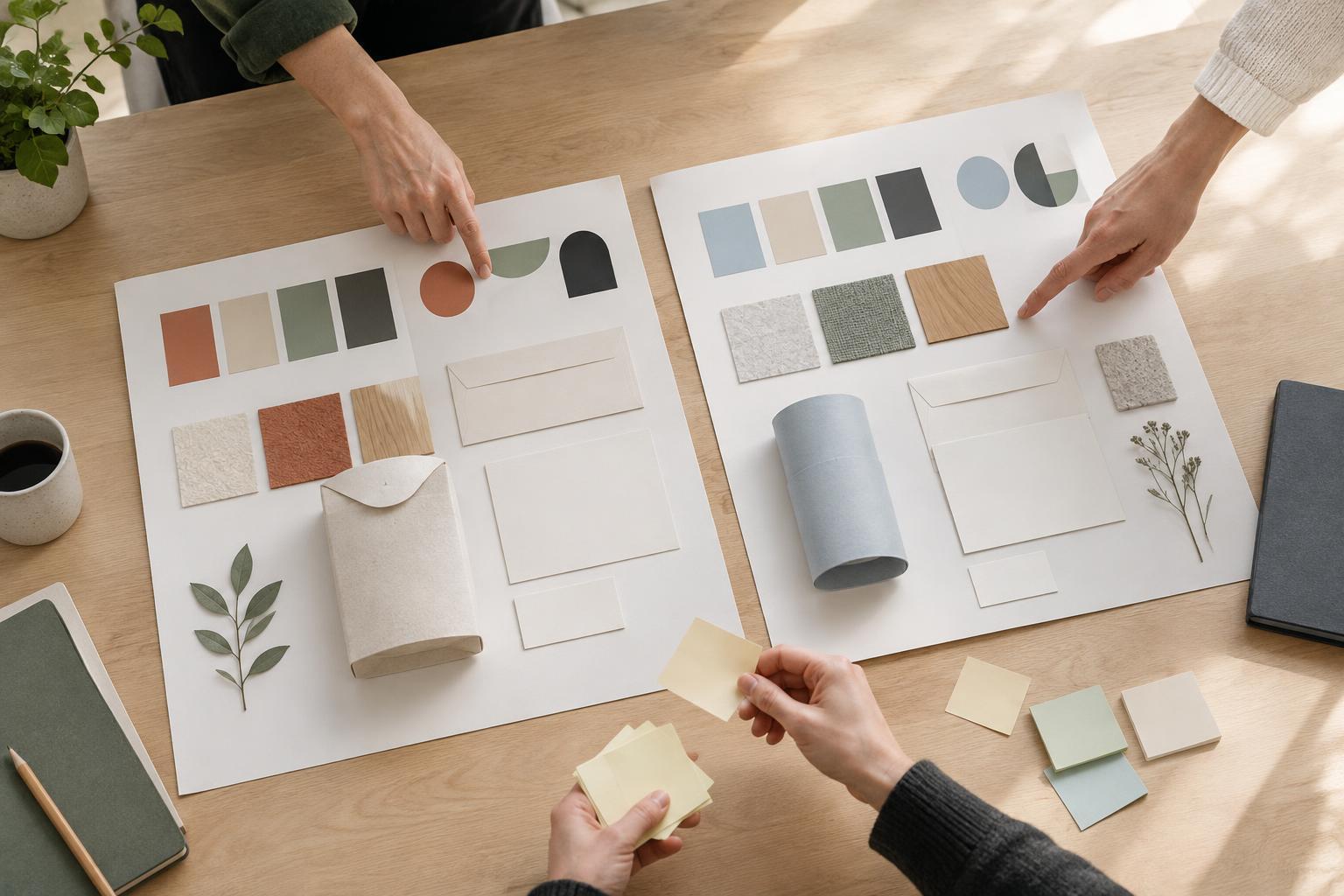
Choose a manageable set of items and present them at a similar level of finish. If one concept is a polished mock-up and another is a rough sketch, participants may respond to the presentation rather than the idea. You do not need to make everything look identical, but label unfinished elements and explain what is still open for feedback. Put each item where people can view it without crowding, whether that means separate wall spaces or clearly divided areas on a shared board.
Give every station the same short prompt. For a visual identity exercise, you could ask: “What impression does this create?”, “Which detail creates that impression?” and “What question would you want answered before developing it?” Invite participants to describe what they see before recommending changes. A comment such as “The dense layout makes the main message hard to find” gives the team more to work with than “Make it cleaner.”
Make the first round quiet and independent
Explain the process before anyone starts: participants will review each station silently, write brief notes and save conversation for later. Give people enough time to look closely, but keep the round moving so every item receives attention. If writing directly beside the work could make later viewers repeat earlier comments, collect notes on separate sheets or ask participants to keep their notes until the end of the round.
Encourage a mix of observations, questions and possible strengths rather than a vote. People can mark which piece of work their note refers to and, if helpful, which prompt they are answering. Allow a participant to pass on a question they cannot answer. This makes it easier to distinguish a considered response from a guess, particularly when the work is intended for an audience that is not in the room.
Discuss patterns without forcing agreement
After the walk, gather the notes where everyone can see them. Read through them before opening a general discussion, then group comments that point to the same issue. Look for repeated observations, but do not treat frequency as proof that a comment is correct. A single question about readability or an unintended association may be worth examining even if nobody else raised it.
Ask participants what in the work led them to a reaction. If two people describe the same concept as both “energetic” and “overwhelming,” the apparent disagreement may point to a real trade-off. Capture both readings rather than trying to settle the matter by volume of support. The facilitator can keep the discussion focused by separating observations about the work from assumptions about what its future audience will think.
End with a testable next step
Close by naming what the team learned, what remains uncertain and what will change next. Avoid turning every note into a revision request. Instead, choose a few questions that matter to the project goal. For example, the team might keep a promising visual direction while trying two versions of its opening layout to see whether the message becomes easier to find. Record who will develop those versions and what the team will compare at the next review.
A gallery walk works best as a way to make feedback visible, not as a substitute for a decision. Participants may spot patterns that the project team missed, but the person or group responsible for the work still needs to weigh those observations against the brief and practical constraints. A short summary of the findings and next step helps contributors see how their input will be used without implying that every suggestion will be adopted.