Start with one idea the viewer can follow
A photo series needs a reason for its images to sit together. That reason might be a process unfolding, a place changing over the course of a day, or different ways people use the same space. Before taking pictures, complete this sentence: “This series shows how…” If the answer is too broad, narrow it until you can imagine specific photographs. “This series shows a ceramics studio” is a subject; “This series shows how a bowl moves from raw clay to a finished object” offers a path.
Choose a practical scope as well. Decide where you can photograph, whom you may need to ask, and what you can realistically observe. A clear beginning, middle and end does not require a dramatic event. It asks you to give viewers an entry point, enough development to keep them looking, and a closing image that feels intentional.
Plan the opening and the ending first
The opening image should help someone enter the series without needing a long caption. It might establish a location, introduce a person, or show the materials before work begins. Look for a frame that gives context while leaving a question open: What will happen here? What is this person making? What is about to change?
The final image should answer or gently reshape that question. In the ceramics example, it could show the finished bowl in use rather than simply repeat an earlier view of the studio. An ending need not reveal everything, but it should give the viewer a sense of arrival. Write a one-sentence description of each planned frame. If the opening and ending could be swapped without changing the experience, consider what transformation the series is meant to show.
Use the middle to show development
The middle is where a series often becomes repetitive. Several attractive close-ups of the same action may reinforce a visual style, but they may not move the idea forward. Instead, list the stages or perspectives a viewer needs to understand. For a making process, these might include preparation, an important decision, a setback or adjustment, and a detail that reveals care. For a series about a place, the middle might show different users, activities or moments of quiet.
Create a flexible shot list rather than a rigid script. Include a wide view for context, medium frames that show relationships, and close details that reward attention. Varying distance is useful when it serves the story; it is not a rule that every series must follow. While photographing, stay alert to moments that complicate your original plan. A useful unplanned frame may explain the subject better than one you imagined in advance.
Edit for progression, not just strong individual images
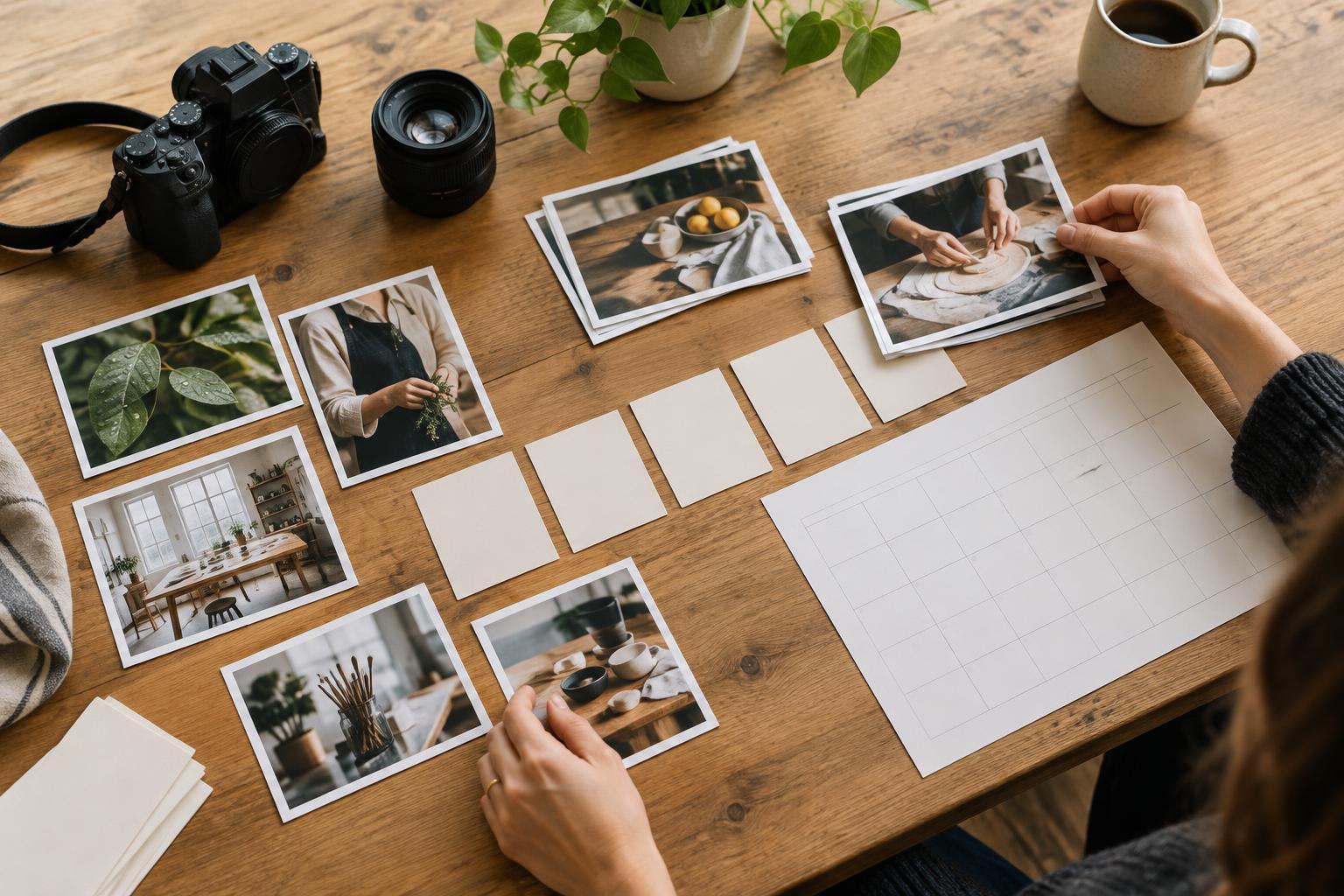
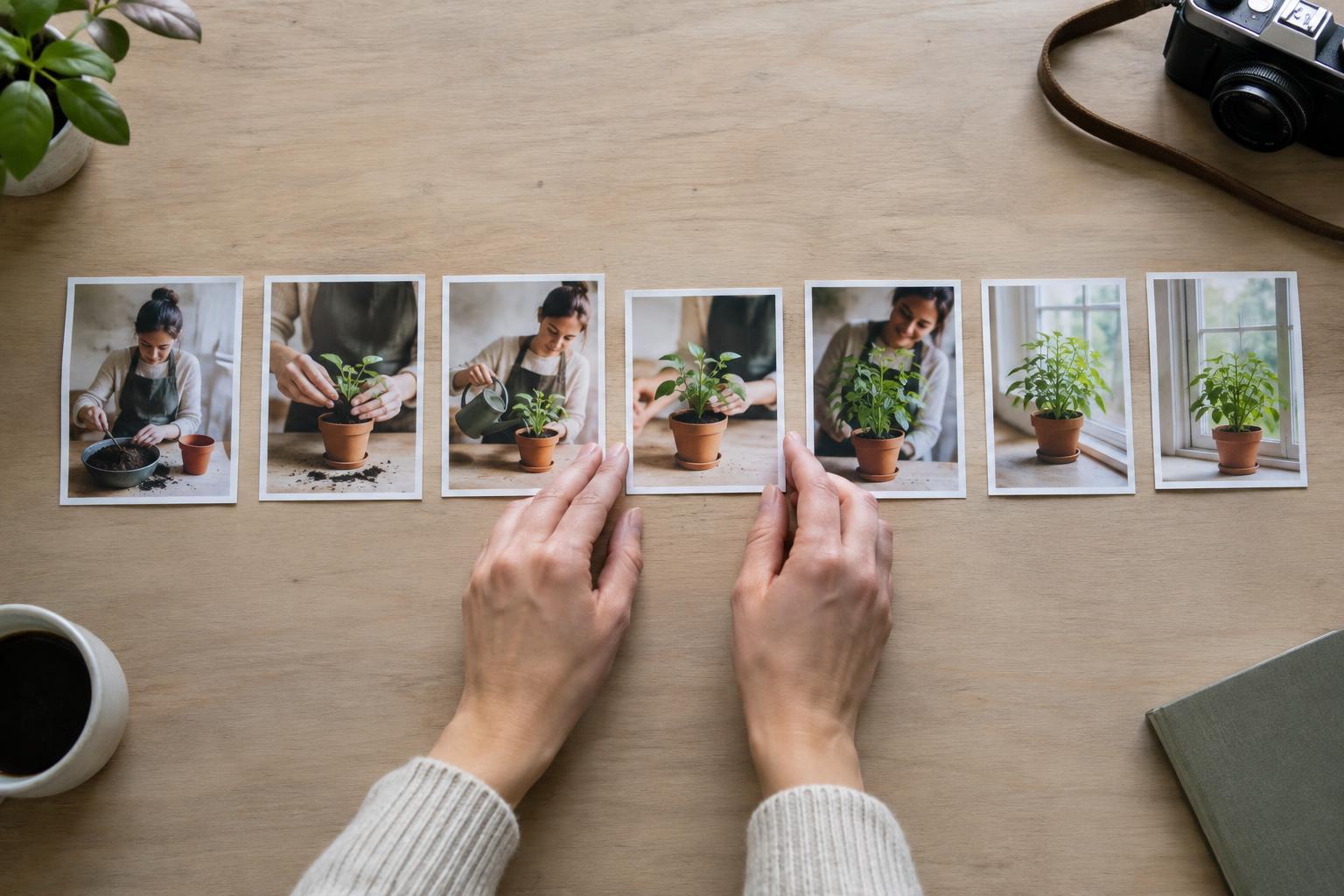
Put your photographs in a provisional order and look at them without captions. Ask what a viewer can understand from one image to the next. Each frame should add information, shift the mood, or change the scale of attention. Two similar images may both be excellent, but if they perform the same job, keeping both can slow the series.
Try a simple sorting exercise: label each image “beginning,” “middle” or “end,” then arrange the middle images by the new question each one answers. Look for abrupt gaps. If a finished object appears immediately after raw materials, you may need a frame that shows the work in progress. Also look for visual echoes, such as a gesture or shape that returns near the end. These can create cohesion without making every photograph look alike.
Test the sequence with a fresh viewer
Show a draft to someone who has not heard your plan. Ask them what they think is happening, where they felt curious, and whether the ending felt complete. Avoid explaining the story first; the purpose is to learn what the images communicate on their own. If viewers miss a key step, decide whether another photograph is needed or whether changing the order would be enough.
Finally, check that any captions support rather than rescue the sequence. Captions can identify people, places or processes that a photograph cannot make clear, but they should not have to explain why every image is included. Check that you have permission to share photographs where needed and that your edit represents people and their work fairly. A clear series is not simply a record of what you saw. It is a considered route through what you want others to notice.